


From −20°C to Charge-Ready: Silicone Rubber Heating for LFP Prismatic Cells
Polyimide Heaters with Thermally Conductive Silicone for Battery Applications
Polyimide vs Silicone Flex Heaters for Lithium-Ion Battery Packs
Can a Battery Heater NTC Measure Battery Cell Temperature?
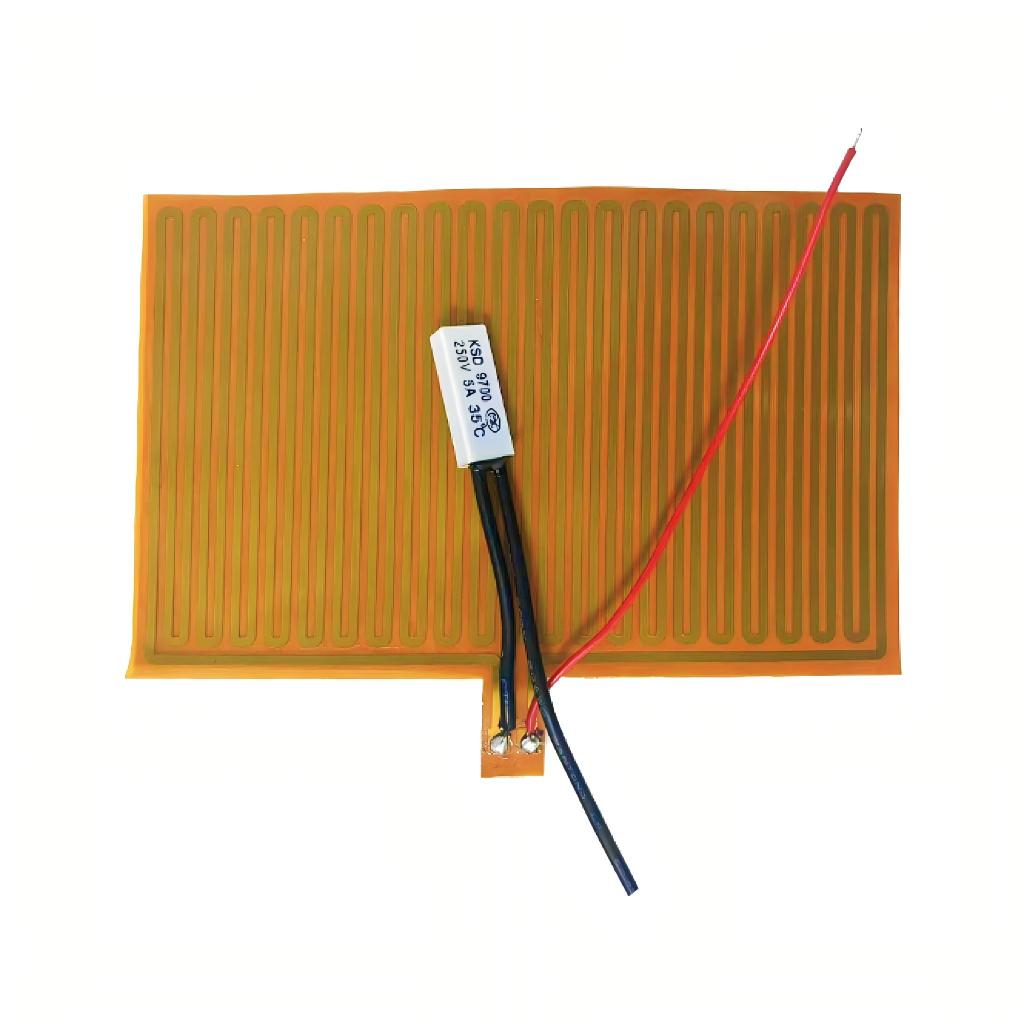
How to Integrate NTC Sensors and Thermal Protection Devices into Flexible Heaters?
How a thin silicone heating pad, sized at just 0.15 W/cm², brings a large LFP cell back to life in cold weather — and how to size one for your own pack.
LFP chemistry has earned its place in energy storage, commercial vehicles and base stations for its cycle life and safety. But it has one well-known weakness: the cold.
● At −20 °C, a typical LFP cell can deliver only 55–65% of its rated capacity, and its internal resistance rises 5–10×, cutting available power dramatically.
● Charging below 0 °C is prohibited. Lithium plating on the anode during cold charging permanently degrades the cell and can create safety hazards.
For systems that must operate (and charge) in winter conditions, the practical answer is a preheating stage: bring the cells above 0 °C — ideally to +5 °C or higher — before normal charge/discharge begins.
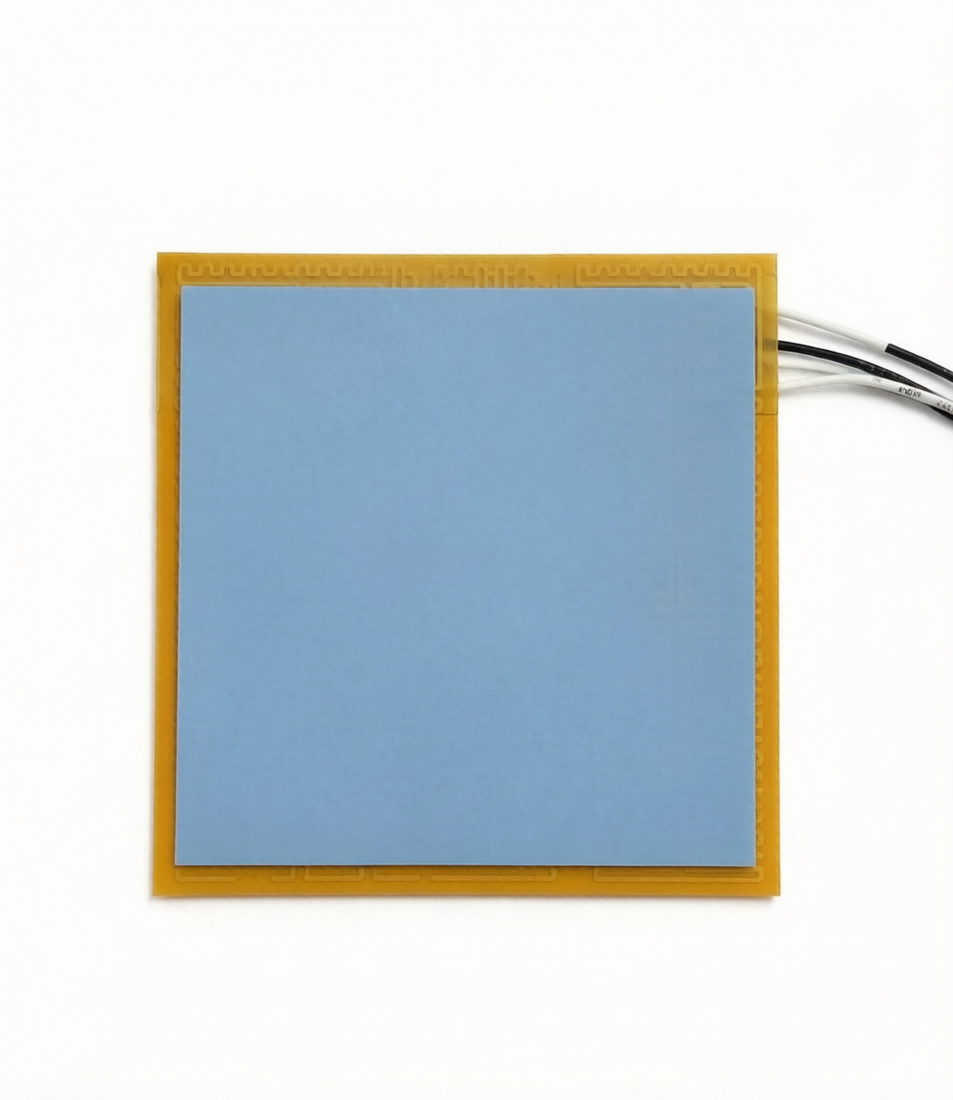
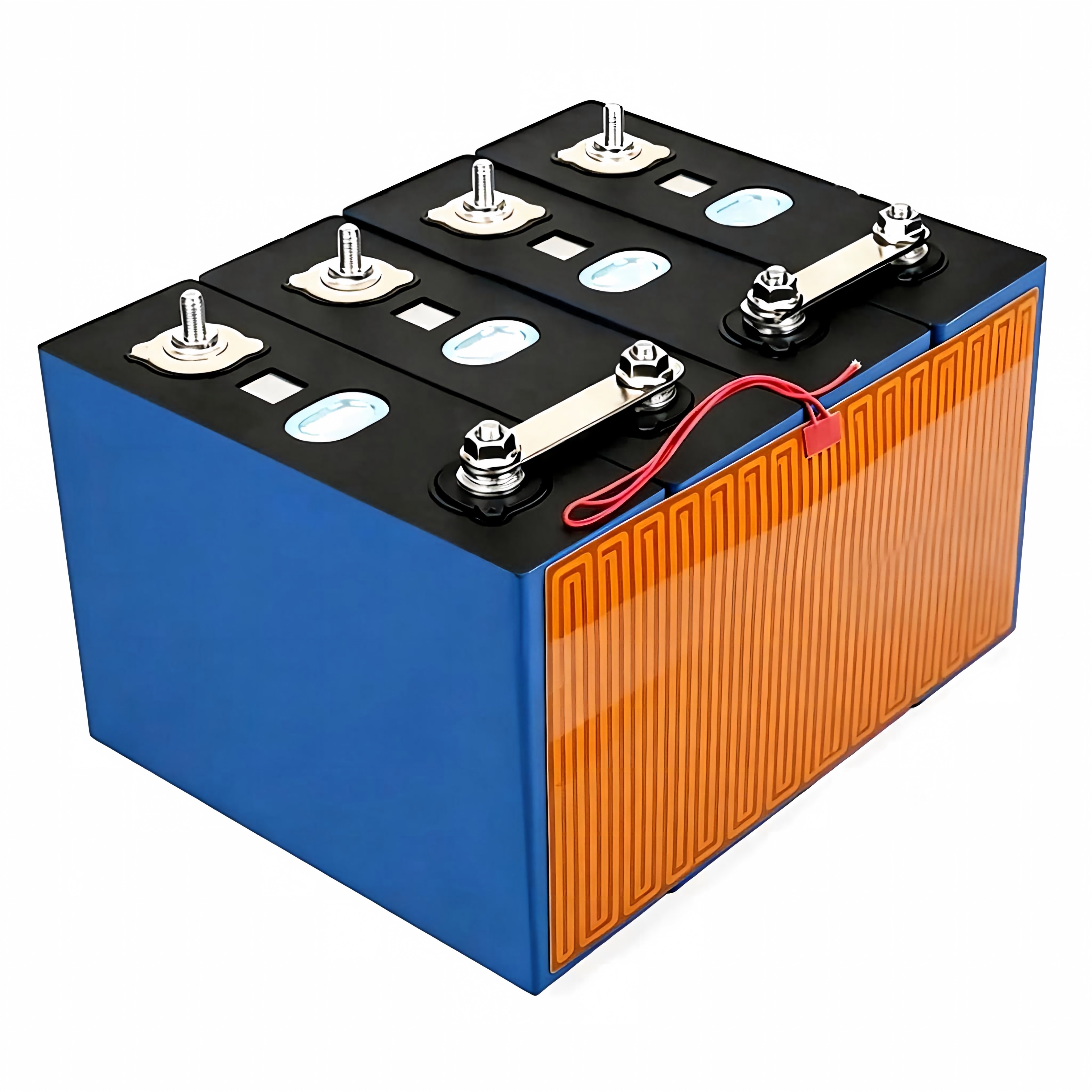
Among the several ways to heat a battery (air heaters, heating film wrapped around the pack, liquid heat exchangers), one of the simplest and most space-efficient is a thin silicone heating pad mounted directly on the cell surface. This blog walks through how we size such a heater for a real cell, and what performance you can expect.
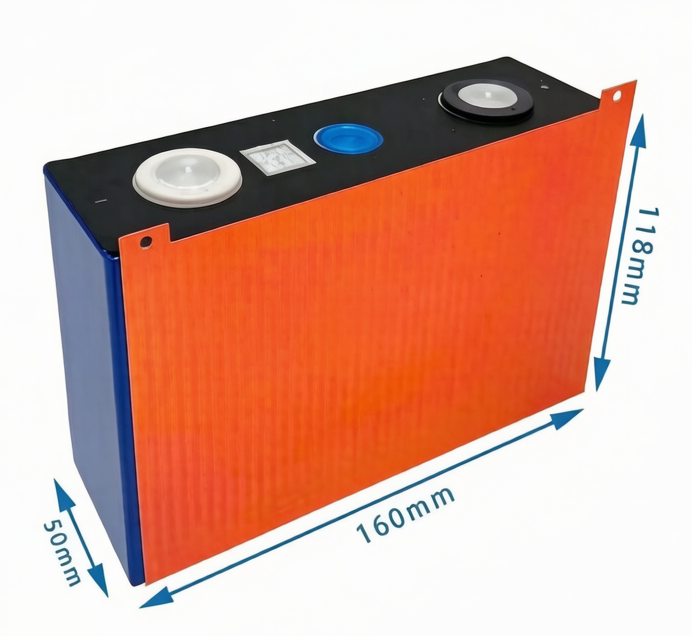
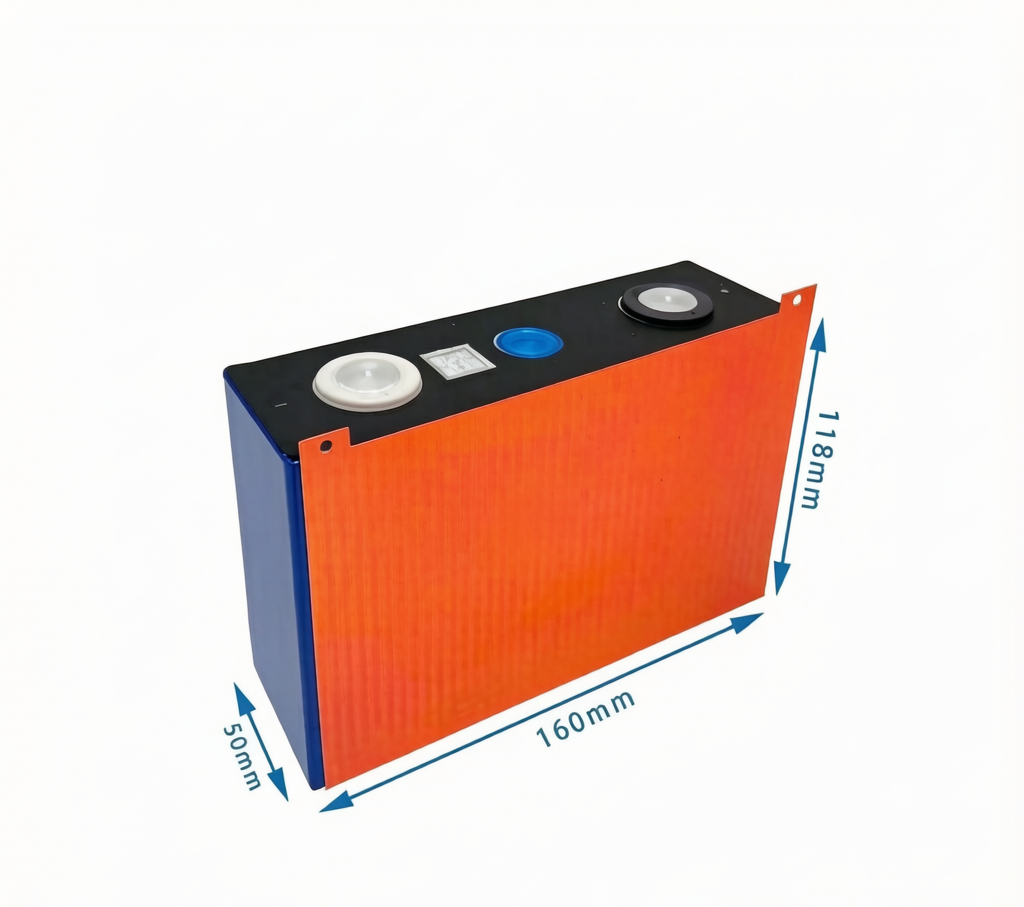
Design target: one heating pad on a large face, bringing the cell from −20 °C to +5 °C in ≈ 30 minutes. The heater is a silicone rubber heating pad bonded to the cell's largest face (prismatic LFP cell 160×50×118.5 mm):
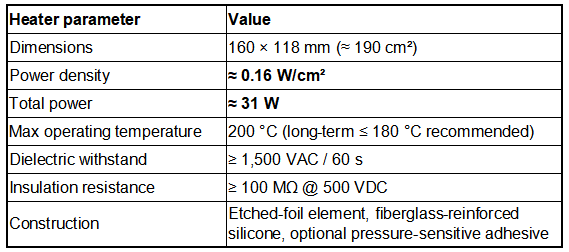
Why such a low power density? For storage cabinets and slow-charge scenarios, gentle preheating is the priority: it keeps the temperature gradient across the cell small, keeps the heater surface only a few degrees above the cell, and is inherently safe — and as the calculation below shows, it is what a ~30-minute preheat asks for on this cell. Faster is absolutely possible (see Section 4); this is the "low and slow" end of the design space.
Sizing a between-face heater comes down to one energy balance: the heater must deliver enough energy to raise the cell's thermal mass by the target ΔT within the target time.
P = (m × c_p × ΔT) ÷ t
m — cell weight (kg) · c_p — specific heat (kJ/kg·K) · ΔT — temperature rise (K) · t — heating time (s)
Worked example — bring the cell from −20 °C to +5 °C (ΔT = 25 K) in 30 minutes:
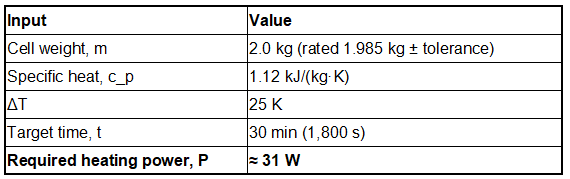
The heater covers one large face of the cell: 16 × 11.8 cm = 188.8 cm². Divide the power by the area:
Power density = 31 W ÷ 188.8 cm² ≈ 0.16 W/cm²
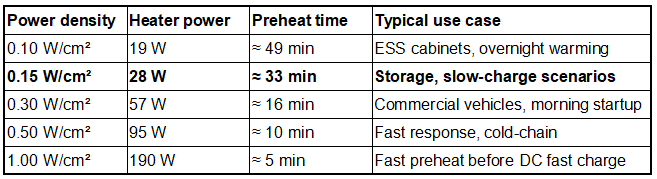
So a single 160 × 118 mm silicone heater at ≈ 0.15–0.16 W/cm² does exactly this job: −20 °C to charge-ready in about half an hour, with the heater surface staying only a few degrees above the cell and a huge margin below the film's 150–200 °C limits. (At the standard 0.15 W/cm² rating the same pad delivers ≈ 33 min — the same design point in practice.)
The same formula works in reverse — if you already have a heater in hand, divide its power by the cell's thermal mass to get the heating rate; if you know the deadline, the table in the next section tells you the power.
Heating time is inversely proportional to total heater power. Once the 30-minute baseline is set, there are two equally valid ways to speed things up:
Option A — keep the power density, add a second heater. Mount an identical pad on the opposite large face. Total power doubles to ≈ 62 W, so the same ΔT takes ≈ 15 min instead of 30 min — and heating both faces at once keeps the temperature gradient through the cell even smaller. Best uniformity per watt.
Option B — keep one heater, double the power density. The same single pad redesigned at ≈ 0.3 W/cm² (≈ 62 W) also lands at ≈ 15 min. Simplest assembly — one pad, one lead — at the cost of a slightly higher surface temperature and a larger gradient through the cell (still only a few K at this level, thanks to the cell's aluminum case).
Scaling reference (same cell, −20 °C → +5 °C, single face; halve the time for double-sided):
One engineering margin worth remembering: the calculation above assumes all the heat goes into the cell. A bare cell in an open cold environment will lose some heat through its other faces — expect 10–30% longer in practice, and insulate the module (or the pack enclosure) to get most of that back.
As a sanity check on cost: a full 30-minute preheat consumes only ≈ 15 Wh — about 5% of the cell's 320 Wh rating, and just a fraction of a percent of the capacity you get back by being able to charge at all.
①. Insulation is the cheapest heater upgrade. Jacket the module before you upgrade the heater.
②. 0.15 W/cm² is deliberately conservative — ideal where safety, battery lifetime and low gradient matter more than speed.
③. For LFP, the real deadline is 0 °C: below it, charging is off the table. Design the preheat to finish at +5 °C or higher to leave margin for control tolerance.
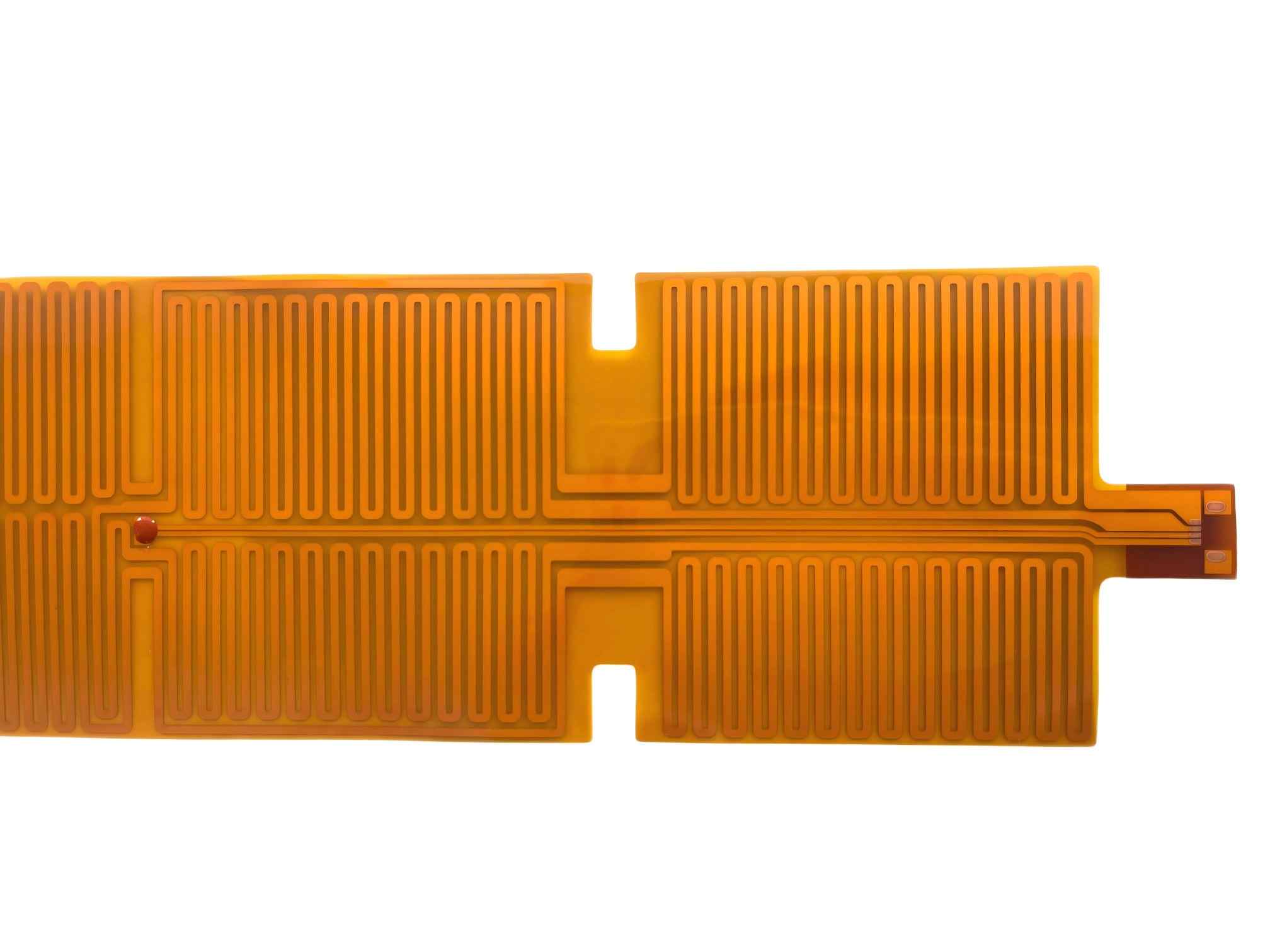
④. Don't forget the control loop. Every preheat stage should pair with NTC feedback and an independent thermal cutoff — heating must stop automatically at the target temperature, and never run unattended.
We manufacture custom silicone and polyimide heating pads for battery preheating — any shape from your cell drawing, from 0.1 to 2.5 W/cm², with integrated NTCs, thermal fuses, lead wires and connectors, and resistance-matched sets for multi-pad packs. Send us your cell dimensions and target preheat time, and we'll return a heater proposal with a predicted ramp curve — samples in 5~7 days.
We offer a wide variety of high-efficiency heaters and heating element.Such as polyimide/kapton heaters,silicone rubber heaters,PET transparent heaters, thick film heaters,PTC heaters, mica heaters,epoxy resin heaters and graphene heating film.
 English
 Russian
 French
 Spanish
 German
 Polish